Most veterans know the VA covers healthcare. Far fewer know exactly what preventive care options they're entitled to, which ones apply to their age and risk profile, and how to actually get them scheduled. The examples of VA preventive care services available today go well beyond an annual flu shot. We're talking about cancer screenings, mental health check-ins, cardiovascular monitoring, and whole-person wellness programs that most veterans never tap into. This article breaks down what's available, who qualifies, and how to make the most of what you've already earned.
Table of Contents
- Key takeaways
- 1. Examples of VA preventive care services you should know
- 2. Key criteria for selecting VA preventive care services
- 3. Whole Health: the preventive program most veterans skip
- 4. Mental health screenings as preventive care
- 5. Comparison of major VA preventive care services
- 6. Situational recommendations for getting the most from VA preventive care
- My honest take on VA preventive care
- Discover the VA benefits you're not using yet
- FAQ
Key takeaways
| Point | Details |
|---|---|
| Preventive care is free for enrolled veterans | Most VA preventive screenings and wellness services cost nothing out of pocket for enrolled veterans. |
| Age and risk factors determine eligibility | Services like lung cancer screening start at age 50 for high-risk individuals, so your personal profile matters. |
| Whole Health is underused | VA's Whole Health program personalizes long-term prevention plans but remains one of the least-used benefits available. |
| Mental health is preventive care too | VA embeds licensed mental health clinicians in primary care clinics to catch problems early, before they escalate. |
| Telehealth expands access significantly | Virtual visits now cover many preventive services, removing geographic and transportation barriers for rural veterans. |
1. Examples of VA preventive care services you should know
Understanding what preventive care means in the VA system starts with a simple distinction. Preventive care is not treatment for a condition you already have. It's about catching problems early, reducing risk, and keeping you healthy before symptoms appear. The VA has built one of the most structured preventive care frameworks in American medicine, and it covers a wide range of services for enrolled veterans at no cost.
Here's what that looks like in practice:
- Cancer screenings: Colorectal cancer screening begins at age 45. Lung cancer screening is recommended for high-risk veterans aged 50 to 80. Breast and cervical cancer screenings follow established USPSTF guidelines.
- Immunizations: Annual flu vaccines, HPV vaccines for eligible veterans, hepatitis A and B series, shingles vaccine, and COVID-19 boosters.
- Cardiovascular monitoring: Blood pressure and cholesterol checks are standard preventive measures for veterans with cardiovascular risk factors.
- Infectious disease screenings: The USPSTF recommends hepatitis C screening for adults born between 1945 and 1965, and the VA follows this guidance. HIV screening is recommended for veterans aged 15 to 65.
- Mental health screenings: Depression, PTSD, and substance use screenings are built into VA primary care visits.
- Whole Health program services: Personalized wellness planning, nutrition counseling, mindfulness programs, and peer health coaching.
"Preventive care in the VA system is not a perk. It's a structured, evidence-based benefit that enrolled veterans have a right to use. The challenge is knowing it exists and asking for it by name."
Pro Tip: When you schedule your next VA primary care appointment, bring a written list of any family history of cancer, heart disease, or mental health conditions. This helps your provider identify which screenings apply to you right now.
2. Key criteria for selecting VA preventive care services
Not every service applies to every veteran. The VA uses age, risk factors, military service history, and clinical guidelines to determine which preventive services are recommended for you specifically. Knowing the criteria helps you advocate for the right care at the right time.
Age is the clearest filter. Colorectal cancer screening starts at 45. Lung cancer screening for high-risk veterans applies between ages 50 and 80. Shingles vaccines are recommended starting at 50. HIV screening covers the 15 to 65 age range. These aren't arbitrary numbers. They're based on when screening statistically saves the most lives.
Risk factors open additional doors. A veteran who smoked for 20 pack-years qualifies for annual low-dose CT lung scans. A veteran with a family history of colorectal cancer may qualify for earlier or more frequent colonoscopies. Combat exposure, toxic exposure (like burn pits or Agent Orange), and service-connected conditions all affect which screenings the VA will prioritize for you.

Eligibility and enrollment matter. You must be enrolled in VA health care to access most preventive services. Priority groups affect cost-sharing for some services, but most preventive screenings are provided at no cost regardless of priority group.
Access options are expanding. Social determinants like transportation and geography significantly affect access to VA preventive services. The VA now offers telehealth for many preventive consultations and mental health screenings, which removes a major barrier for rural veterans. You can also explore the VSO portal for help navigating care coordination if you're unsure where to start.
Pro Tip: Ask your VA primary care provider for a printed copy of your preventive care schedule. This document lists which screenings are due, overdue, or upcoming based on your personal profile. Most veterans don't know this document exists.
3. Whole Health: the preventive program most veterans skip
VA's Whole Health program is the most misunderstood and underused preventive care benefit in the system. It's not a single service. It's a philosophy and a structured program that shifts the focus from treating illness to building a personalized plan for long-term well-being.
When you enroll in Whole Health, you work with a health coach and a clinical team to identify what matters most to you in life, and then build a care plan around that. Want to be physically active enough to play with your grandchildren? Whole Health builds a plan toward that goal. Struggling with sleep and chronic pain? Whole Health integrates nutrition, movement, mindfulness, and clinical care into one coordinated approach.
Participation in Whole Health increases the likelihood of having meaningful health goal discussions with your provider by 32%. That number matters because goal-directed care produces better outcomes than reactive treatment. Veterans who use Whole Health report higher satisfaction and better follow-through on preventive screenings.
The program is available at most VA medical centers and many community-based outpatient clinics. You don't need a referral to ask about it. You can bring it up at any primary care appointment.
4. Mental health screenings as preventive care
Most veterans don't think of mental health screenings as preventive care. They should. Catching depression, PTSD, or substance use early, before it reaches crisis level, is exactly what prevention is designed to do.
The VA's Primary Care-Mental Health Integration program places licensed mental health clinicians directly inside primary care clinics. You don't have to make a separate appointment or walk through a different door. Your primary care visit can include a brief mental health check-in, and if something comes up, a warm handoff to a clinician happens the same day.
Virtual mental health visits have expanded this reach dramatically. Virtual visits now account for 45% of VA mental health appointments, and research shows that each 1% increase in virtual mental health visits is associated with a nearly 3% reduction in suicide-related events among veterans. That's a meaningful number. It means telehealth isn't just convenient. It's saving lives.
If you've been hesitant to bring up mental health concerns at a VA appointment, the integration model is designed specifically to reduce that barrier. It's a routine part of care, not a separate stigmatized process.
5. Comparison of major VA preventive care services
Here's a side-by-side look at core preventive services, their recommended frequency, and who they apply to:
| Service | Who it applies to | Recommended frequency | Cost to veteran |
|---|---|---|---|
| Colorectal cancer screening | Veterans aged 45 and older | Every 1-10 years depending on method | No cost |
| Lung cancer screening (CT scan) | High-risk veterans aged 50-80 | Annually | No cost |
| Blood pressure monitoring | All enrolled veterans | Every visit or annually | No cost |
| Cholesterol screening | Veterans with cardiovascular risk | Every 4-6 years or more often if at risk | No cost |
| Flu vaccine | All enrolled veterans | Annually | No cost |
| Hepatitis C screening | Veterans born 1945-1965 or at risk | One-time or ongoing if at risk | No cost |
| HIV screening | Veterans aged 15-65 | One-time; more often if at risk | No cost |
| Mental health screening | All enrolled veterans | At primary care visits | No cost |
| Whole Health consultation | All enrolled veterans | As needed | No cost |
Pro Tip: If a VA provider tells you a preventive screening isn't available at your facility, ask specifically about community care options under the MISSION Act. You may be able to get the screening at a local provider and have it covered by the VA.
6. Situational recommendations for getting the most from VA preventive care
Knowing the services exist is step one. Actually getting them scheduled and coordinated requires a bit of strategy. Here's how to approach it:
-
Request a preventive care review at your next appointment. Ask your primary care provider to go through your full preventive care schedule. Many providers won't bring it up unless you ask directly.
-
Use telehealth for screenings and consultations that don't require in-person visits. Mental health screenings, Whole Health consultations, and medication reviews can often be done virtually, saving you time and travel.
-
Understand the difference between preventive and specialty care. Preventive care is handled in primary care. If a screening finds something abnormal, you'll be referred to specialty care. Specialty care referrals require coordination between your VA primary care team and specialists, and sometimes involve community providers under the MISSION Act. Knowing this distinction helps you ask the right questions and follow up appropriately.
-
Advocate for Whole Health by name. Don't wait for your provider to suggest it. Ask specifically: "Can I be enrolled in the Whole Health program?" This puts you in the system and gets the process started.
-
Check for unclaimed benefits that complement your preventive care. Many veterans qualify for benefits they've never claimed, including those that support healthcare access and costs. The benefits finder tool at VetAdvantage can surface options you may not know about.
-
Keep a personal health record. Track which screenings you've had, when, and what the results were. The VA's MyHealtheVet portal lets you access this digitally, but a simple paper record works too. This matters especially if you receive care from both VA and community providers.
-
Ask about toxic exposure screenings. Veterans exposed to burn pits, Agent Orange, or other hazardous materials may qualify for additional targeted screenings under the PACT Act. This is a category of preventive care that expanded significantly in recent years and many veterans haven't yet accessed it.
My honest take on VA preventive care
I've worked with enough veterans to know that the biggest obstacle to using VA preventive care isn't eligibility. It's awareness. Most veterans I talk to have no idea that colorectal cancer caught at Stage I carries over a 90% five-year survival rate, while Stage IV drops below 15%. That gap isn't just a statistic. It's the difference between a routine colonoscopy and a crisis.
What I've learned is that the VA system rewards veterans who ask specific questions. Not "do I have any screenings due?" but "can you pull up my full preventive care schedule and go through it with me?" That one shift in how you approach the appointment changes everything.
The Whole Health program is the piece I feel most strongly about. It's genuinely different from anything else in American healthcare. The problem is that it's still underutilized because veterans don't know to ask for it by name. If you take nothing else from this article, take that. Walk into your next VA appointment and say: "I want to enroll in Whole Health."
Being an engaged patient in the VA system isn't about being difficult. It's about knowing what you've earned and making sure you get it.
— Tony
Discover the VA benefits you're not using yet
Veterans who take preventive care seriously often find that other unclaimed benefits are sitting right alongside it, waiting to be accessed. VetAdvantage was built by a Navy veteran who saw firsthand how many benefits go unclaimed simply because veterans don't know they exist. The platform matches you with over 400 verified benefits based on a short questionnaire, no sensitive personal information required.
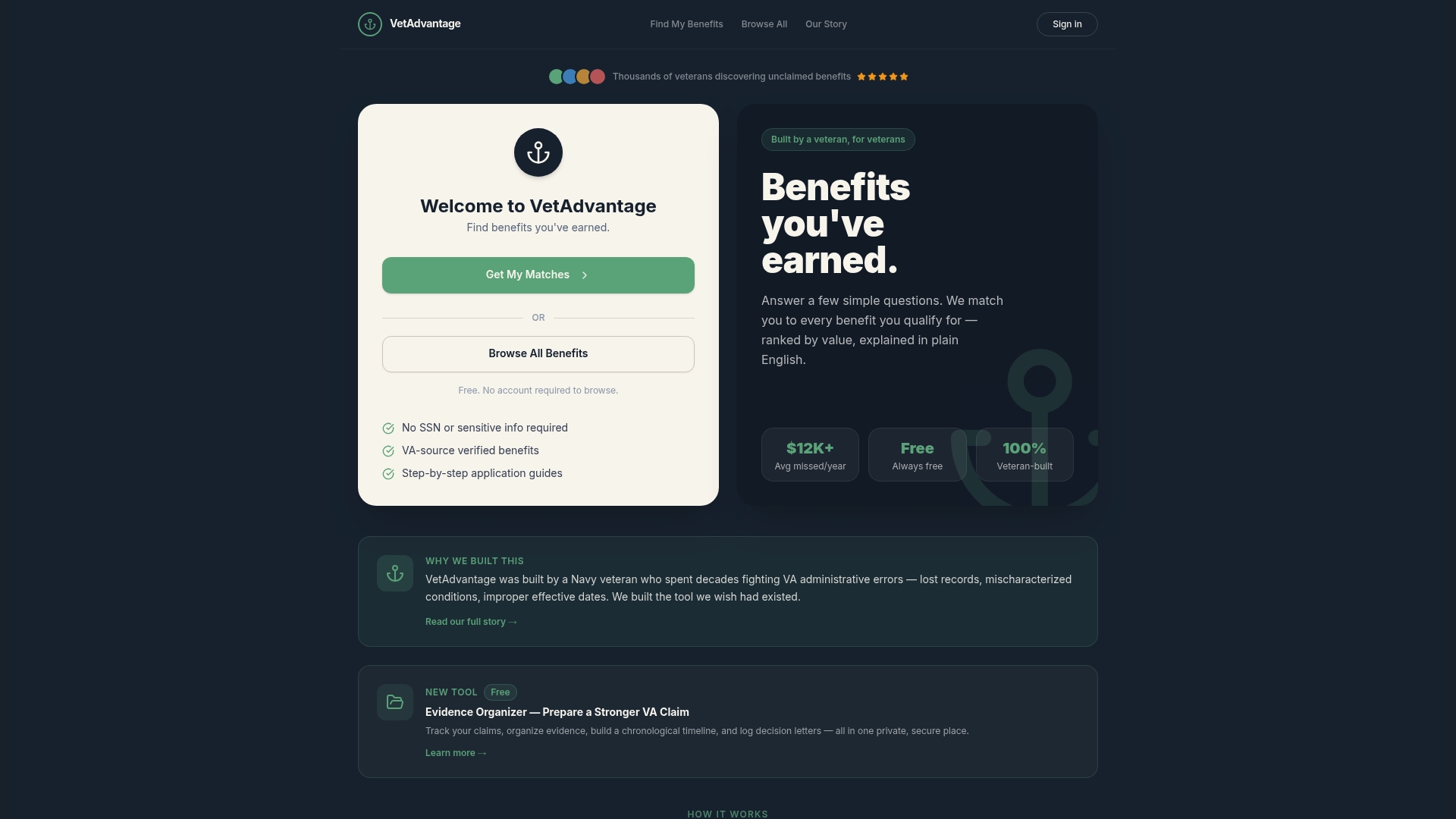
Veterans using VetAdvantage discover an average of over $12,000 in missed benefits per year. From healthcare access to property tax relief, the platform surfaces what you've earned in plain English. Start with the hidden benefits page to see what might be waiting for you, or use the claim readiness tool to prepare for your next step.
FAQ
What are examples of VA preventive care services?
Examples include colorectal and lung cancer screenings, flu and hepatitis vaccines, blood pressure and cholesterol monitoring, mental health screenings, HIV testing, and Whole Health program consultations. Most are available at no cost to enrolled veterans.
What does preventive care mean in the VA system?
In the VA system, preventive care refers to services designed to detect health problems early or prevent them from developing, including screenings, immunizations, and wellness programs, rather than treatment for existing conditions.
How do VA specialty care referrals work?
If a preventive screening finds something abnormal, your VA primary care provider initiates a specialty care referral. This can go to a VA specialist or, under the MISSION Act, to a community provider if VA specialty services aren't accessible within required timeframes.
Is the VA Whole Health program free for veterans?
Yes. The Whole Health program is available at no cost to enrolled veterans at most VA medical centers and many outpatient clinics. You can request enrollment through your primary care provider without a formal referral.
Can veterans access VA preventive care through telehealth?
Yes. Many VA preventive services, including mental health screenings, Whole Health consultations, and medication reviews, are available through telehealth. Virtual visits now make up a significant portion of VA mental health appointments and are expanding across other preventive services.